
Marketing has evolved significantly with digital advancements, leading to various strategies like performance marketing vs digital marketing. While both aim to boost brand visibility and sales, they operate differently.
If you’re unsure which approach is best for your business, this guide will break down:
- What is digital marketing?
- What is performance marketing?
- Key differences between the two
- Which one should you choose?
What is Digital Marketing?
Digital marketing encompasses all online marketing efforts to promote a brand, product, or service. It includes both paid and organic strategies, such as:
- Search Engine Optimization (SEO)
- Social Media Marketing (Organic & Paid)
- Email Marketing
- Content Marketing (Blogs, Videos, Infographics)
- Pay-Per-Click (PPC) Advertising
Pros of Digital Marketing:
- Builds long-term brand awareness
- Engages audiences through multiple channels
- Works for both B2B and B2C businesses
Cons of Digital Marketing:
- Results take time (especially SEO & organic growth)
- Harder to track direct ROI in some cases
What is Performance Marketing?
Performance marketing is a results-driven approach where advertisers pay only for specific actions, such as:
- Clicks (PPC – Pay Per Click)
- Leads (CPL – Cost Per Lead)
- Sales (CPS – Cost Per Sale)
Common Performance Marketing Channels:
- Google Ads (Search & Display)
- Social Media Ads (Meta, TikTok, LinkedIn)
- Affiliate & Influencer Marketing
- Native Advertising (Outbrain, Taboola)
Pros of Performance Marketing:
- Pay only for results (lower risk)
- Faster ROI compared to organic strategies
- Highly measurable with clear KPIs
Cons of Performance Marketing:
- Can be expensive in competitive niches
- Requires constant optimization for best results
Key Differences Between Performance Marketing vs Digital Marketing
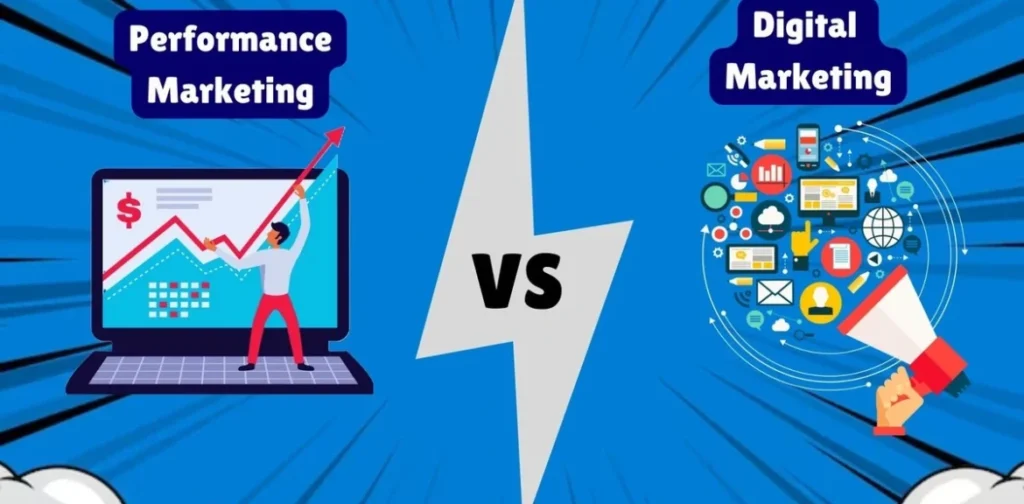
Differences between performance marketing vs digital marketing
| Aspect | Digital Marketing | Performance Marketing |
| Payment Model | Pay for visibility (e.g., ads, content creation) | Pay only for results (clicks, leads, sales) |
| ROI Tracking | Harder to measure (e.g., brand awareness) | Easily measurable (conversion-based) |
| Time to Results | Longer (SEO, organic growth) | Faster (immediate ad-driven results) |
| Best For | Brand building, long-term growth | Direct sales, lead generation |
| Cost Efficiency | Can be cost-effective long-term | Higher upfront cost but performance-based |
Which One Should You Choose?
Choose Digital Marketing If:
- You want long-term brand authority.
- Your goal is organic growth & audience engagement.
- You have a content-driven strategy (blogs, videos, SEO).
Choose Performance Marketing If:
- You need immediate, trackable results.
- Your focus is direct sales or lead generation.
- You prefer paying only for conversions.
Best Approach? Combine Both!
Many businesses use digital marketing for brand building and performance marketing for quick conversions. Example:
- Run SEO & content marketing to attract organic traffic.
- Use Google Ads & retargeting to convert visitors into buyers.
Future Trends to Watch
- AI-Powered Marketing: Both digital and performance marketing will leverage AI for better targeting.
- Privacy-First Advertising: With cookie restrictions, first-party data will be crucial.
- Hybrid Strategies: Brands will blend organic and paid efforts for maximum impact.
Conclusion
Both digital marketing vs performance marketing play vital roles in a successful marketing strategy. While digital marketing builds long-term brand awareness and trust, performance marketing delivers quick, measurable results. By combining both, businesses can achieve sustainable growth and high ROI. For a tailored approach that aligns with your goals, consider consulting a marketing expert.
